The company

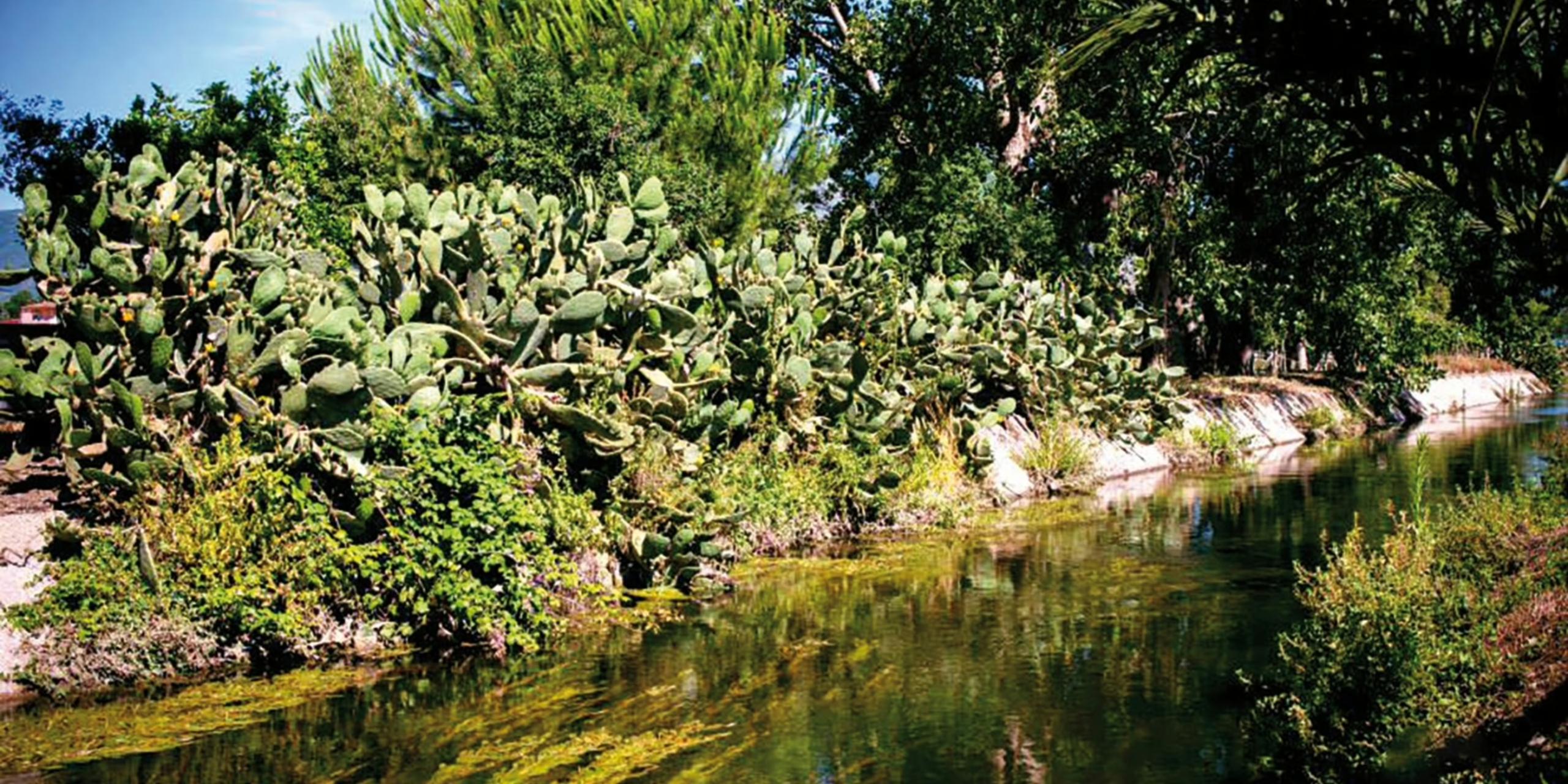
Vitis Aurunca lies between the foothills of the Monte Massico and those of the Roccamonfina volcano, the Mediterranean Sera and the Appian Way.
L’azienda nasce nel 2007 dalla visione di agronomi appassionati e celebra le terre fra il Monte Massico e il Garigliano, dove gli ancient Romans un tempo lodavano i frutti di questi suoli vulcanici. Oggi l’Azienda possiede e conduce vigneti, oliveti, frutteti e mandorleti, quindi produce vino, olio e frutta. Le diverse colture assicurano la presenza della manodopera lungo tutto l’anno, grazie alle diverse stagionalità che hanno le varie colture.

In principio erano solo pochi gli ettari coltivati mentre oggi le proprietà ha raggiunto una vasta estensione. Per circa la metà la proprietà è collocata in località Cellole (CE) sulla Domiziana al km 8,800 su ambo i lati. Altri terreni dell’azienda agricola rientrano nel comune di Sessa Aurunca e riguardano le coltivazioni di vigneti e oliveti. Si tratta di organic crops in the hills, and certified integrated sulla costa. L’Azienda, quindi, commercializza sia prodotti provenienti da coltivazioni biologiche che integrate.
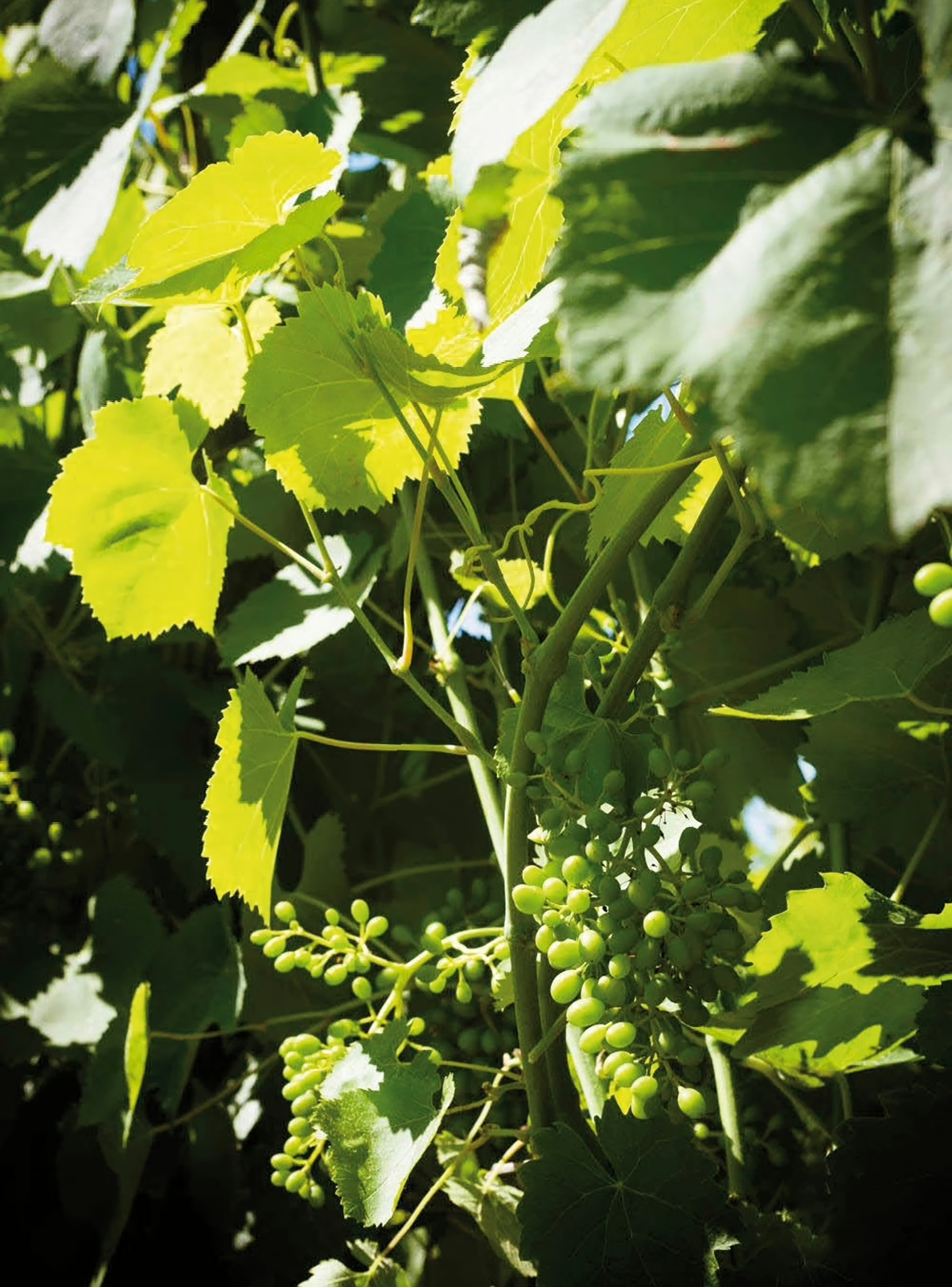
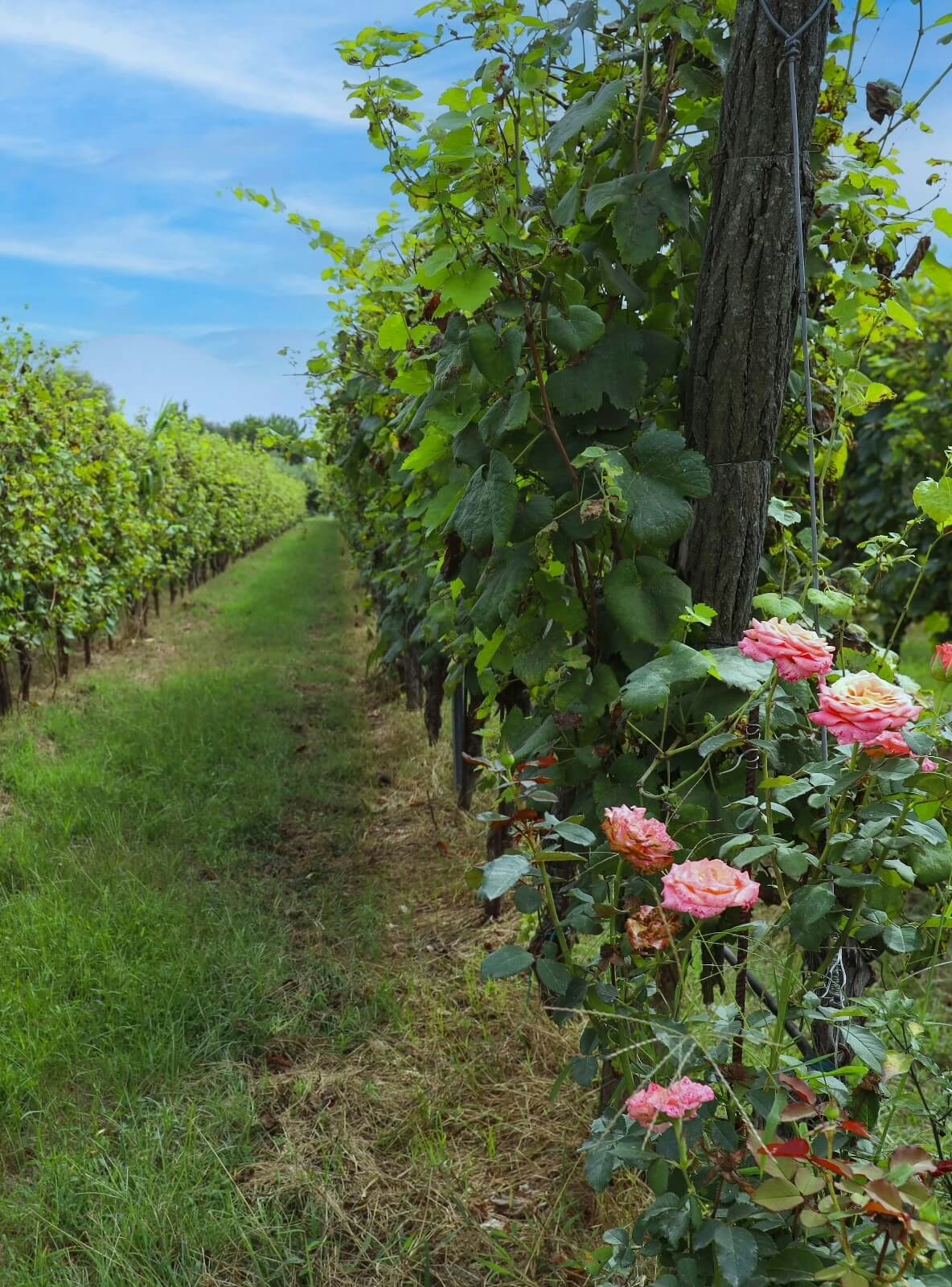
In ogni grappolo, si riscoprono tradizioni antiche, accanto a valori aziendali di rispetto ambientale, cura per biodiversità e etica nella produzione. Vitis Aurunca si impegna nella soil conservation,, nell’uso razionale dell’acqua e in sustainable agronomic practices,, evitando l’erosione e favorendo la stabilità del terreno. La tecnologia moderna si fonde con la saggezza antica: motori efficienti, riduzione delle emissioni di CO2, e un ricorso a energie rinnovabili con pannelli fotovoltaici.

History

In the land where Vitis Aurunca now stands, hills once rose silent whispering to the blue sky of Campania. There, between the gentle slopes of Monte Massico, l’antica Sinuessaand the slopes of the extinct volcano of Roccamonfina and the Tyrrhenian Sea, a legend was born: Falernum, the nectar of the Roman gods.
The story begins with a mythological encounter, narrato dal poeta Silio Italico. Bacco, dio del vino, in sembianze umane, chiese ospitalità al vecchio Falerno. Colpito dalla generosità dell’anziano, Bacco trasformò quei pendii in vigne lussureggianti, segnando l’inizio di una tradizione enologica senza tempo.
Falerno, initially according to some reconstructions is believed to have been a golden white produced by Falanghina, then also embraced shades of red, thanks to Aglianico and Primitivo. It was a wine of such a strong and severe character that the poet Horace defined it as “ardens”, a wine of fire. It required years of aging, up to two decades, to soften its harshness and take on an unattainable complexity.
The tables of the ancient Romans were adorned with this prestigious wine. Petronius Arbiter, in his Satyricon, tells of a centenary Falerno served during Trimalchio's sumptuous dinner. A tribute to his legendary longevity.

In quel tempo, oltre 150 produttori coltivavano queste terre, creando il Falerno in tre diverse qualità: l’austerum, il dulce, e il tenue che venivano vendute in tutto l’Impero Romano in anfore di terracotta, munite di “Pittacium”, antesignane delle moderne etichette che mostravano il tipo di vino, l’anno di produzione e la zona di provenienza delle uve. Era un vino così versatile da essere diluito con acqua o arricchito con miele e spezie.
Falernian amphorae were transported by sea from the ports of Sinuessa, Gianola and the mouth of the Garigliano, reaching places such as Manchester, Marseille, Dusseldorf, Cologne and Carthage in North Africa. The spread of these amphorae throughout the Mediterranean testifies to the popularity and prestige of Falerno, considered the wine of kings and the most expensive and desired in the Roman Empire.
Falernum, inizialmente secondo alcune ricostruzioni si crede sia stato un bianco dorato prodotto dalla falanghina, abbracciò poi anche le sfumature del rosso, grazie all’aglianico e al primitivo. Era un vino di un carattere così forte e severo che il poeta Orazio lo definì “ardens”, un vino di fuoco. Necessitavano anni di invecchiamento, fino a due decadi, per ammorbidire la sua asprezza e rivestirsi di una complessità inarrivabile.
The tables of the ancient Romans were adorned with this prestigious wine. Petronius Arbiter, in his Satyricon, tells of a centenary Falerno served during Trimalchio's sumptuous dinner. A tribute to his legendary longevity.

In quel tempo, oltre 150 produttori coltivavano queste terre, creando il Falerno in tre diverse qualità: l’austerum, il dulce, e il tenue che venivano vendute in tutto l’Impero Romano in anfore di terracotta, munite di “Pittacium”, antesignane delle moderne etichette che mostravano il tipo di vino, l’anno di produzione e la zona di provenienza delle uve. Era un vino così versatile da essere diluito con acqua o arricchito con miele e spezie.

Falernian amphorae were transported by sea from the ports of Sinuessa, Gianola and the mouth of the Garigliano, reaching places such as Manchester, Marseille, Dusseldorf, Cologne and Carthage in North Africa. The spread of these amphorae throughout the Mediterranean testifies to the popularity and prestige of Falerno, considered the wine of kings and the most expensive and desired in the Roman Empire.
But Falerno was not just a symbol of taste: it was a brand of status. Caesar, in celebration of his victories, offered it at his banquets. Cleopatra herself presented “pure and resistant Falerno” to Caesar. His fame extended far beyond the borders of Rome, reaching the markets of Alexandria, Carthage, Brittany and Spain.
This wine was a symbol of Roman wine excellence. As Virgil states, no wine could be compared to Falerno. It was a product of such prestige that the Romans guaranteed its origin and vintage with labels on the amphorae, an ancestor of the modern concept of DOC.

With the barbarian invasions of the 3rd century, the least happy era for Falerno began. The vineyards were plundered and viticulture survived only thanks to the care of the monks, custodians of this sacred liquid necessary for the rite of the Eucharist.

Today, among the vineyards of Vitis Aurunca, the voices of that ancient greatness echo. The passion for Falerno lives again, a bridge between past and present, a promise of quality and history. Here, where time seems to have stopped, every drop of Falerno tells an ancient story of men and Gods, of fertile lands and immortal traditions. And every sip is a journey through time, an experience that transcends the centuries, bringing with it the echo of a civilization that has never stopped celebrating life through the nectar of its vineyards.